
Disruptions to SNAP benefits during the recent government shutdown left both rural food banks and families across Whatcom County facing sudden strain and uncertainty, unsure of how long reduced assistance would last.
But for many people, the loss of benefits compounded barriers that were already making food access difficult – like living in a rural area where groceries aren’t as easily accessible, or managing a chronic condition that restricts diet flexibility.
For Bellingham resident Rachael Haycox, 32, SNAP is what helps her, as a single mother, manage her 11-year-old son’s Type 1 diabetes. When her benefits didn’t show up, she worried about how she would buy food for him, let alone the specific foods needed to manage his diabetes.
“People who suffer from lifelong conditions or any condition that affects diet, it’s not just a good idea to eat the right things, it’s the difference between living to 45 or living to 85,” Haycox said in an email. “The ability to buy the right kinds of foods is so essential.”
She turned to community resources and was grateful for the support, but much of what she found wasn’t suitable for managing her son's condition.
After the government shutdown on Oct. 1, SNAP benefits were still guaranteed, but court filings and federal guidance created confusion about whether November payments would be reduced or delayed.
From Nov. 1 to 6, SNAP was disrupted before full benefits were reinstated on Nov. 7, and all Washington households received their November benefits by Nov. 20, according to Norah West, assistant director of the Washington State Department of Social and Health Services.
The uncertainty around when benefits would resume left families and food banks unsure of how long they would need to stretch the resources they had.
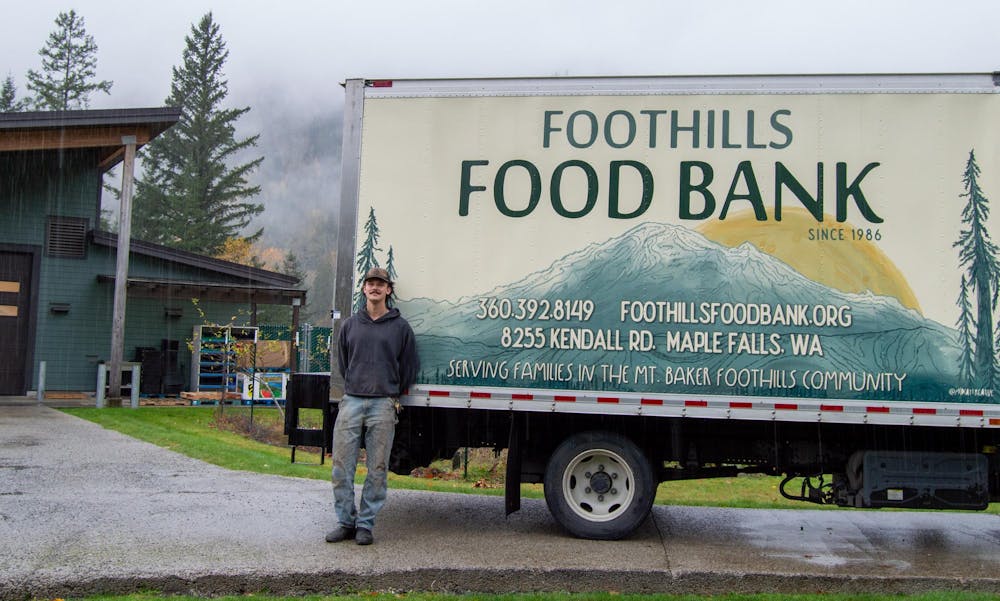
In East Whatcom, where access to food is already limited, resources were stretched even before the disruption. Henry Fisher, executive director of Foothills Food Bank, said geography alone shapes what many residents in East Whatcom can access.
East Whatcom is classified by the U.S. Department of Agriculture as a “low-income and low-access” area – its new term instead of “food desert” – meaning there are few places to buy groceries, and the options that do exist often cost more and carry less. For many families, the nearest full grocery store is in Bellingham, which requires a vehicle to reach, or a long bus ride on a limited, hard-to-time schedule.
Unlike in Bellingham, where multiple emergency food services cluster along the I-5 corridor, many East Whatcom residents, especially those without transportation, rely solely on Foothills when their access to food is interrupted.
Fisher said the difference in East Whatcom isn’t in the number of people affected; it's how hard the disruption hits the people who lose SNAP support.
“The people who are affected are affected much harder,” Fisher said. “This hits the most vulnerable people in our community the hardest and in ways that are unique from the most vulnerable people in an urban context.”
Foothills typically serves 325 to 350 households per week, but in the last week of October, that number rose to 374 – roughly 1,600 to 1,800 individuals. On Nov. 6, the food bank had already served 260 households in a single day, with another distribution night still ahead.
“Those numbers will go up closer to 400. It’s increasing rapidly,” Fisher said.
Much of that increase came from both longtime clients who needed additional assistance, as well as first-time visitors who had been managing with SNAP but couldn’t once the benefits stopped.
“Our number increased like 50% during Covid and stayed there,” Fisher said. “So, I don’t know what will happen with SNAP. It may decrease again and level off. It also may not.”
On Nov. 4, Governor Bob Ferguson announced a $2.2 million weekly emergency allocation to support Washington food banks until SNAP benefits were restored. Fisher said the funding is distributed based on total visits in the previous year, which tend to be higher for larger, urban food banks with more operating hours. Foothills, which is open twice a week and logs fewer counted visits, was receiving $2,500 per week.
“It’s not nothing; it's not enough,” Fisher said. “I’m going to take it. I’m going to spend it. I already have spent this week’s on shelf-stable food. It’s not enough whatsoever.”
To keep up with rising demand during the disruption, Fisher doubled the amount of food Foothills puts out. Under normal circumstances, the goal is to offer a nutritionally diverse, culturally appropriate selection with stock like produce, proteins, shelf-stable goods, dairy and bread.
“Food banks are not designed to meet 100% of folks’ grocery needs,” Fisher said.
But the loss of SNAP changed what food banks needed to provide, leaving Foothills scrambling to find additional funding to meet the surge in demand. Fisher said the community stepped up quickly – in the two weeks leading up to Nov. 6, they brought in $12,000 in individual donations, which is half of Foothills’ food purchasing budget for a month.
According to West, assistant director of DSHS, about 24,200 Whatcom County residents, roughly 10% of the population, were receiving SNAP benefits in September 2025, just before the shutdown began.
West said that households with payment dates in the first week of November were the ones directly affected, and that new SNAP applications submitted during the shutdown were paused until federal courts ordered the program to start again.
DSHS is updating its federal government shutdown contingency plans to reduce the disruptive impacts of any future federal shutdowns on Washington families, West said.
For many households, the return of benefits didn’t undo the days families spent worrying about what they’d do without them.
Fisher said he’s worried how families and food banks would cope if the disruption continued, calling the problem “bigger than the food bank network can handle.”
“I’m concerned about people going hungry … food assistance is not something to kick around as a political football. It has immediate and direct impacts on the most vulnerable people’s well-being when things like SNAP gets interrupted,” Fisher said. “It’s my job to put a little band-aid on, but I can’t fix it in this role. That’s scary to have that out of my control.”
For Haycox, the delay made one thing clear: she’s going to plan for how she’ll handle things if something like this happens again, especially when it comes to her son’s diet.
“Now I know I need to plan for this,” Haycox said. “Next time will be better because I’ll be more prepared.”
Janessa Bates (she/her) is a city news writer for The Front this fall quarter. She is currently studying visual journalism and political science at Western. Outside of the newsroom, she co-leads a club called WWU Photo Video Club, enjoys reading and loves to picnic with her dachshund. You can reach her at janessa.thefront@gmail.com.