


The Port of Bellingham has made plans to install a public fuel dock in Blaine Harbor, but challenges for Blaine Harbor tenants still persist over limited fuel options.
“Most people are not in the boating industry. It doesn't affect that many people, but the people it does affect, it greatly affects,” said Dave Rasmussen, owner of Western Yacht Systems.
In order to install a public fuel dock, the port must first conduct a cleanup and then determine if installing fuel tanks is feasible, said Mike Hogan, public affairs administrator for the Port of Bellingham.
“We've had a number of boaters, and our commissioners ask about it, but the cleanup work needs to get done first,” Hogan said.
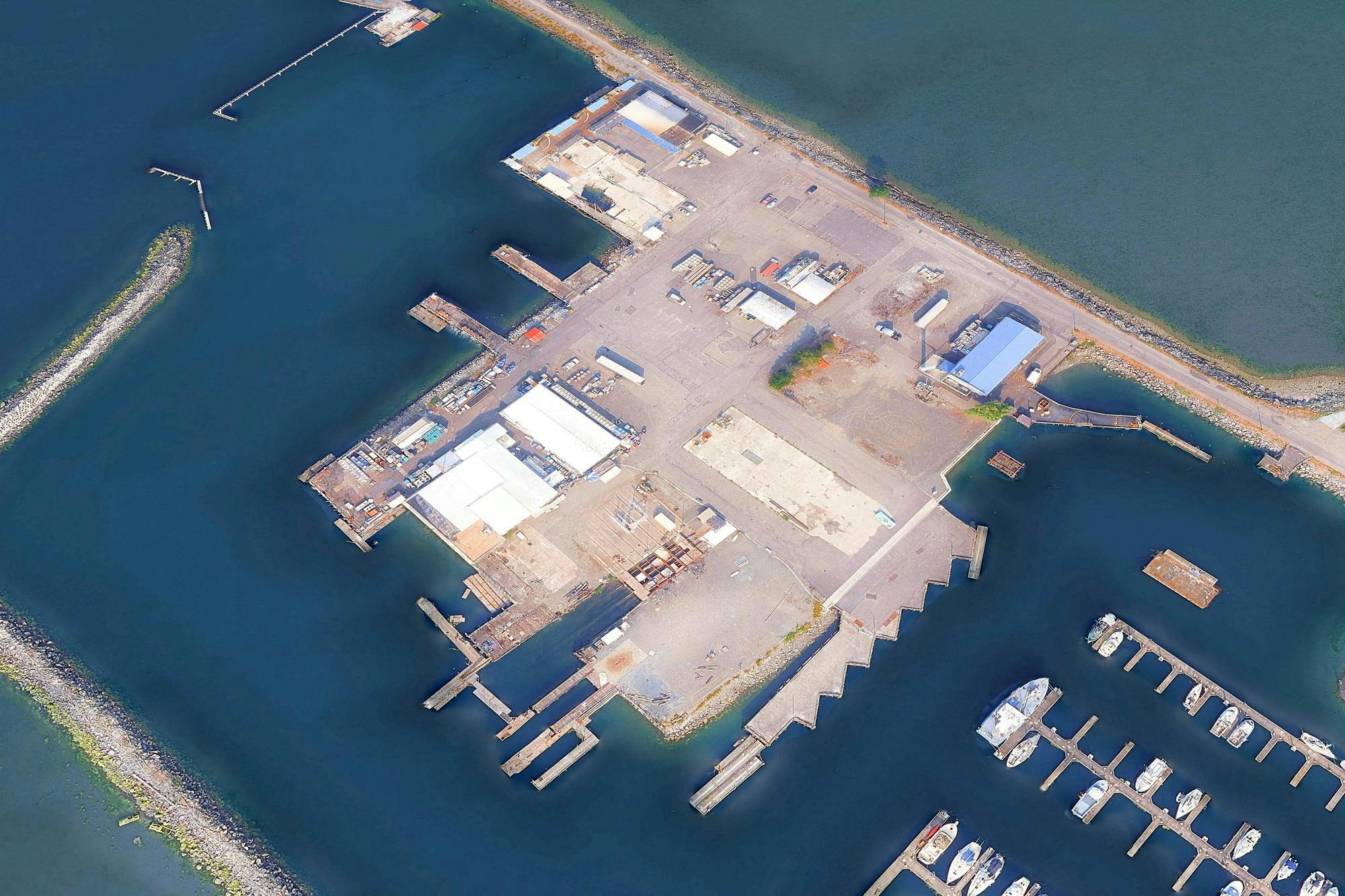
The Westman Marine clean-up is slated to take place sometime in the next two years, where it will be turned into a do-it-yourself boatyard for repairs and maintenance.
“It would fit right in to have a fuel dock as part of that. But that's not a decision that's been made,” said Jim Kyle, former president of the Whatcom Working Waterfront Coalition.
One of the current options for fuel is to make arrangements with a fuel truck, but according to Rasmussen, using the fuel truck is about a three-hour process that requires a boat to get underway and park at a special dock. This process is primarily for larger boats that carry over 300 gallons of diesel, leaving out smaller boats that run on gasoline.
“They're gonna laugh at you if you call and say, ‘Bring me a hundred gallons of gas,’” Rasmussen said.
Another option is to fuel at Point Roberts Marina, but an analogy that Randall Parten, owner of Dream Yacht Co., used to describe fueling at Point Roberts is like driving down to Seattle to fuel your car and then driving back up to Bellingham.
“Nobody would ever do that. It’s very silly and impractical,” Parten said.
Last is the option to use the fuel dock at Semiahmoo Marina. However, a petition launched by Parten in 2024, now with about 100 signatures, details grievances ranging from rescinded promises Semiahmoo made to the Port of Bellingham to bans of individuals from using their fuel dock, including Parten and Rasmussen.
“There is nowhere for me to get fuel within hours or hundreds of dollars from Blaine, because I need gasoline,” Parten said.
Since Semiahmoo is the only fuel dock near Blaine Harbor, any kind of personal issues with the owners creates challenges for operating a business in Blaine, said Dan Tucker, executive director for Whatcom Working Waterfront Coalition.
“That's the unique scenario that has called all this into question,” Tucker said.
Parten, who also operates a marine towing and rescue business, said that he has to carefully coordinate his activities going to Point Roberts. First, getting enough fuel, carrying extra and then spending about $200 each way.
Parten said that the next nearest response for towing and rescue is the Coast Guard, which is about two hours away, not including the time it takes to get a crew together. The other option is the Whatcom Sheriff’s boat, which mainly does patrols and is not on call for towing.
“It’s a big reason that I do it. It's not as a primary business, but I saw a need,” Parten said.
Tucker said that while Semiahmoo’s fuel dock is privately owned, because of the nature of maritime operations, where one is obligated by law to assist someone in distress, a piece of infrastructure like a fuel dock should be more publicly accountable.
“There's more incentive for a private company to operate in a public manner, and not take on the onus of acting solely in their private interest, but to operate for the benefit of the community in which they serve,” Tucker said.
Former Competition
According to Kyle, a number of fuel docks that existed in the 1960s eventually went away completely or got rid of their fuel such as Blaine Marina Inc., a private company set up to be a serious fuel provider that shut down in 2014.
“It's been very frustrating, but it's not just the last few years. It's the last few decades,” Kyle said.
Many of these sites now need to be cleaned up using funds from the Model Toxics Control Act, a state-sponsored fund that collects taxes from oil companies, which are then given to local governments for clean-up sites. Kyle said there has been a shortage of those funds.
“Right now, the shortage of MTCA funding is holding up everything that needs to happen in Blaine,” Kyle said.
Parten said that there are currently six people banned from using the Semiahmoo fuel dock, half of whom are marine service providers competing with services offered by Semiahmoo board members.
“They are, in essence, competitors in the same industry,” Parten said.
Rasmussen alleges that customers and contractors alike have complained of rude and belligerent behavior from Semiahmoo and that the arguments have been used as a means of banning them from accessing the fuel dock.
“Why are you banning these contractors, and why are you doing it under false pretenses? That's what really irks me,” Rasmussen said.
Promises made to the port
At a Port of Bellingham meeting on April 5, 2016, the Semiahmoo Marina Condominium Association gave a presentation recommending that the port partner with Semiahmoo rather than take on the one-time and recurring costs of running a public fuel dock.
In their presentation, Semiahmoo made promises to provide discounts to Semiahmoo tenants as well as Blaine Harbor tenants.
Semiahmoo also made promises to the port that they were ready to be a good neighbor and not try to be a monopoly.
“They're in the condo business, so when you give all that fuel, and they're not even in that real business, that should have been a red flag,” Rasmussen said.
Attendees raised concerns at the meeting about the effectiveness of the fleet without a fuel dock and that the lack of competition would allow Semiahmoo to set the price wherever they wanted.
“If you want to call it a monopoly, it's the fact that they're the only ones there, and when that happens, you do not have to have customer service,” Rasmussen said.
Over the course of 2016 to the present day, Semiahmoo pulled back the discounts, starting with port tenants, eventually leaving the discounts for Semiahmoo slip owners, Parten said.
Semiahmoo Harbormaster Doug Romano stated that the discounts were not meant to be forever, according to an Oct. 2025 article from The Northern Light.
On Oct. 21, 2025, Parten spoke during a port public comment meeting outlining the banning of boaters from the Semiahmoo fuel docks and the discount rollbacks. The port then made the decision to write a letter to Semiahmoo to get clarification on their commitments.
However, the promises made in 2016 were all verbal, and no formal agreement was made in the form of a contract, which the port commissioner acknowledged, giving them little to no leverage over Semiahmoo.
Rasmussen believes that the port should have never allowed Semiahmoo to have a monopoly in the first place and instead should have immediately constructed its own fueling facility.
“It's like planting a tree; it should have been done a long time ago,” Rasmussen said.
Parten believes that, unlike gated communities that don’t sell fuel to the public, Semiahmoo does serve the public by selling fuel.
“When you're deriving revenue from the public, that changes the optics of it,” Parten said.
What now?
Kyle said that a harbor needs to have a fuel source in order to function properly, but it will be dependent on the cleanups.
“It would be expensive to do. But only the port can do it right, as far as I'm concerned, and the fact that Semiahmoo Marina has a fuel supply doesn't solve all these problems,” Kyle said.
Tucker emphasized that, while private fuel docks are fine and that many companies run their own fuel docks, it is still necessary to have competition and availability.
Parten said because of the slow pace of the clean-up and the immediacy of the problem, the best way forward is for the port to reestablish the commitments that Semiahmoo made in 2016.
“There really is no solution at hand other than a cooperative relationship that was proposed already that should be restored,” said Parten.
DuPree Nugent (he/him) is a city news reporter for The Front this fall quarter. He is a third-year student studying news/editorial journalism and English with a creative writing emphasis. In his free time, he enjoys long-distance running, listening to music and writing poems and short stories. He can be reached at dupreenugent.thefront@gmail.com.


