
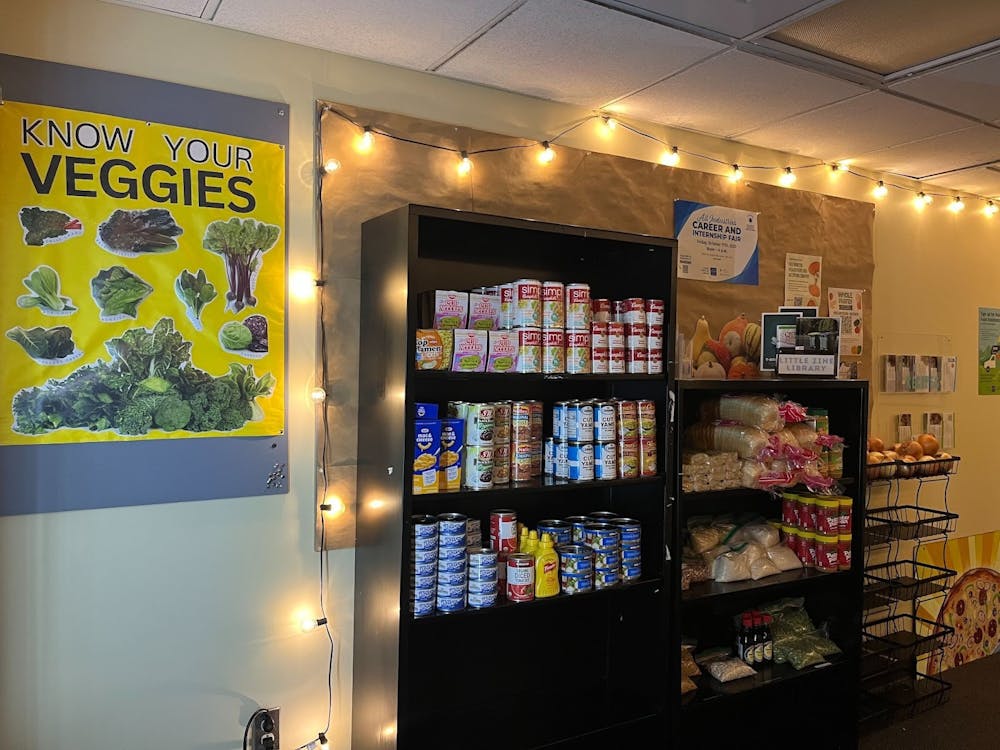
A new $4.50-per-quarter fee included in Western Washington University’s fee structure for Bellingham students has taken effect this fall, providing the first type of stable funding to the Western Hub of Living Essentials (WHOLE) pantry.
The funding helps supply and expand WHOLE’s operations, including partially funding a full-time position to maintain the pantry’s stock, develop community connections to expand pantry operations and assist students in securing basic needs like food and hygiene products.
“...Food insecurity, specifically, always ranks in the top three reasons that students are leaving Western,” said Adam Lorio, director of the Associated Students’ (AS) governance advising program.
Lorio said that the reason a fee is used versus another financial mechanism is because proposing a fee is one of the tools available to elected students and can be helpful in times of budgetary challenges.
The idea for the fee came from an AS senator in the spring of 2024, according to Lorio. Once the idea for the fee was brought forth, a referendum describing the fee and its purpose was written and passed by the student body.
It was then approved by Western’s Board of Trustees in the fall of 2024 in their annual fee approval meeting to be implemented in fall 2025.
“It's explicit in the referendum language in this particular referendum that it will go back to another vote of the students,” Lorio said. “What (student government) is most likely to do is update the fee if the research says that should be considered and then put that updated referendum in front of the student body this spring.”
Because the referendum stated this would be a two-year pilot program for the fee, a referendum for it will return to the student body to be voted on again to return to Western’s fee structure or not. It would be brought up this spring so the interim period between the referendum’s passage and its reapproval by Western’s trustees would not disturb or destabilize the fee’s collection.
The fee’s implementation coincides with an increased demand for support at food pantries throughout campus.
“The previous academic year, when we relied mostly on donated funds, we were seeing around 600 students per week,” said Tulea Enochs, whose position as the WHOLE pantry coordinator is partially funded by the fee. “This last week, we saw 2,012 students utilize the pantry.”
Student leaders of Western’s Food Insecurity Network (FIN) said a major factor in campus food insecurity is the lack of awareness surrounding the issue, which leads to students being unaware that they are food insecure.
“Food insecurity is not just knowing where your next meal comes from,” said Western junior and co-President of FIN, Ajax Pingree. “There’s a stereotype of constantly eating ramen cups because it’s all you can afford, but it can also be not having access to good food or healthy food or filling food.”
The $4.50 quarterly fee rounds to approximately $141,000 gathered during the academic year, as the fee is not charged during the summer, according to Enochs.
The original plan for the fee’s allocation looked to split the fee’s revenue relatively evenly between Enochs’ salary and the pantry, meaning that the budget for food purchasing for WHOLE would be around $80,000 for the year. This amount has since shifted to $130,000 a year for the pantry, using only $11,000 to fund Enochs’ yearly pay, because the vast majority of her position’s salary can be sourced through other fees and funds that are available instead of relying on the fee’s revenue.
The $130,000 is used for wholesale food purchasing to stock WHOLE’s pantry shelves, with a small portion that also goes to transportation costs of picking up and dropping off items for the pantry.
The majority of Enochs’ time as the pantry coordinator is spent rapidly reacting to the needs of the pantry by finding and purchasing food to stock shelves, and developing relations with local businesses such as Trader Joe’s, Avenue Bread, and community-supported food rescue centers like Miracle Food Network. Her position also involves a lot of heavy lifting - according to Enochs, this quarter alone, the pantry operators have so far moved a little over five metric tons of food into the pantry.
“I would love to see the student fee continue, not just selfishly,” Enochs said. “My position is a contract for two years, so my position will end at the end of the next academic year unless the fee is continued.”
According to Enochs, the $141,000 in financial support for the WHOLE pantry is not sufficient to meet student needs’ demands. Based on her experience purchasing, moving and stocking food, the pantry would need around $500,000 per year to feed students.
When the fee is reviewed this spring and students vote on the referendum again, Lorio said that AS will have to wrestle with analyzing the fee’s effectiveness to decide on its continuation and whether $4.50 will remain the quarterly price. Though there is no current prediction for the fee’s stability following this referendum, he said the student governance is very conscious and careful in how they ask students to help fund food security on campus.
According to student advocates against food insecurity on campus, making the resources available and destigmatizing their usage is paramount to tackling food insecurity among students.
“I think a huge part of (combating food insecurity) is getting rid of the shame associated with using social services or relying on these kinds of things because a lot of people might not realize that they are food insecure,” said Western senior and FIN co-President Danny Duffy. “The food pantries are for anyone who needs it … It's not a shameful thing.”
Rosalie Johnson (she/her) is a campus life reporter for The Front this quarter. She is a second year journalism major on the news/editorial track and aims to finish a minor through Western’s Honors College. Outside of reporting, she enjoys watching new movies and exploring Bellingham with friends. You can contact her at rosaliejohnson.thefront@gmail.com.