

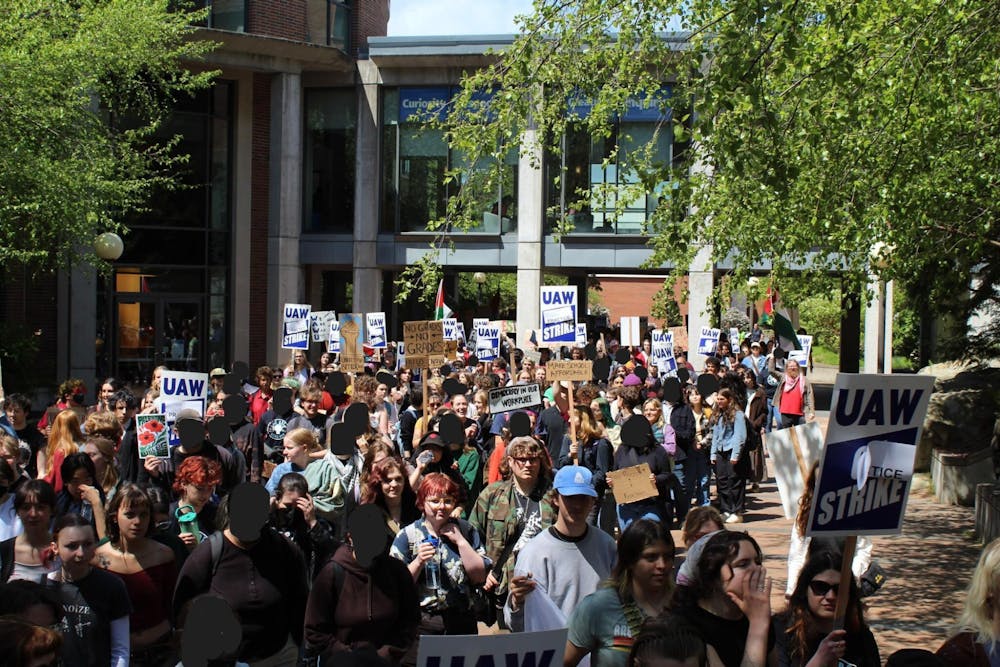
Last year, after more than two weeks of student-led protest, Western Washington University signed a memorandum of understanding (MOU) with the WWU Divest Apartheid Coalition on May 29, 2024, marking a significant step in an ongoing campus movement for Palestinian liberation and ethical investment.
The encampment, organized by the Arab Students Association and the Jewish Voice for Peace, began in mid-May on the lawn in front of Old Main. More than 70 tents were laid out and maintained a non-violent, community-focused space that called for direct action in response to Western’s financial and political entanglements with companies complicit in Israeli apartheid and occupation.
Students organized around five central demands:
Acknowledge and address the harm toward Arab and Arab American students.
Fully disclose university and Foundation financial investments.
Divest from corporations complicit in Israeli occupation and apartheid.
Reinvest in affected communities, including Palestinian students and Ethnic studies.
-
Convene an emergency Board of Trustees meeting to address these issues publicly.
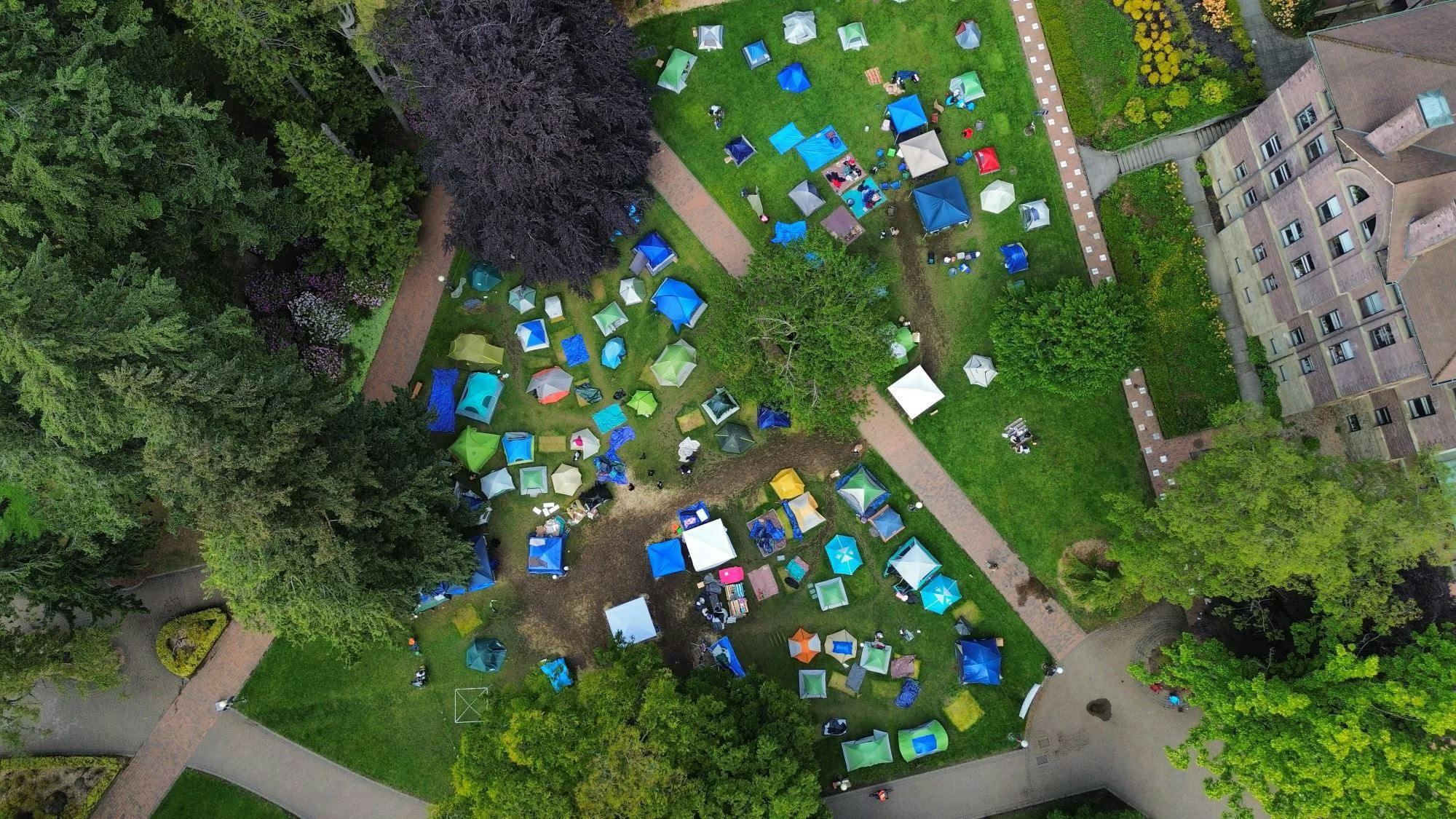
An aerial view of the Gaza Solidarity Encampment on the lawn in front of Old Main, in Bellingham, Wash. where students started pitching tents on May 14, 2024, to demand Western Washington University divest from companies tied to Israeli military operations. The encampment, organized by the WWU Divest Apartheid Coalition, became a symbol of student activism and direct action. // Photo courtesy of the WWU Divest Apartheid Coalition
The protest coincided with a parallel campaign led by Western Academic Workers United (WAWU), whose union members demanded contract equity, wage increases and tuition relief.
The agreement followed a week of negotiations and coordinated actions, including a march through campus outside President Sabah Randhawa’s office.
A student at Western who attended the encampment during the day spoke to The Front anonymously to avoid possible disciplinary action by the university.
“The community, motivation and even empowerment many people experienced in the encampment were constantly juxtaposed with the sobering knowledge that we were only there because of atrocities committed against other people,” they said. “The greatest thing about the atmosphere created in the encampment was no one was alone.”
The signed, though non-binding, MOU between the administration and the Divest Coalition outlines several commitments, including the creation of a formal process to review divestment proposals by August 31, 2024, the consideration of scholarships for Palestinian students, etc.
Western has yet to publish its current investment portfolio, despite promising to do so under the MOU.
While student leaders characterized the agreement as “historic,” they were clear it does not constitute full victory.
“I would see this as a win, and also not a win in some ways,” said Jasmine Welaye, a Syrian-American graduate student from Western and an encampment organizer. “In the sense that faculty and students at the university have been wanting a process for divestment in general, not even from just Israeli companies or companies that support the genocide, for a very long time, in particular fossil fuels. It's a huge win and it means a lot.”
Among their concerns is the limited reach of Western’s newly adopted Socially Responsible Investment Policy (SRIP), passed by the Board of Trustees on April 11. The policy prohibits investment in fossil fuels, tobacco production, weapons manufacturing and companies complicit in human rights violations, including genocide, modern slavery and ethnic cleansing.
“If the university wanted to divest their money from companies complicit in genocide or companies that are not aligning with this policy, they could just do that themselves,” Welaye said.
According to the Advisory Committee on Socially Responsible Investing (ASCRI), which initially proposed this new policy, Western’s $78 million operations budget includes state funding, student tuition and fees, and university-managed expenditures. It does not, however, govern the university’s $144.2 million endowment, which is independently managed by The Foundation for WWU and Alumni, a nonprofit organization responsible for overseeing external donations.
In February 2025, The Foundation withdrew from its previous agreement with the ACSRI, declining to disclose its investment holdings to the university’s ethics committee. That withdrawal drew criticism from students, who argue without Foundation participation, any ethical investment framework remains incomplete.
Although the SRIP allows students, staff and faculty to submit divestment requests amidst concerns, such proposals require formal endorsement from either the Faculty Senate, Associated Students or must be backed by a broad campus petition.
Student organizers are still focused on pursuing all five of their original demands. Their ongoing goals include:
Holding the administration accountable for scholarship and study abroad opportunities.
Demanding full divestment from companies such as HP, Microsoft and Boeing. These firms have been linked to Israeli military infrastructure.
Pressuring the WWU Foundation to adopt the SRIP or implement a similar ethical investment policy.
Urging the Board of Trustees to compel The Foundation to comply with social responsibility standards.
Ensuring the timely creation of the promised ethical contracts committee.
“Nearly every university and college building in Gaza has been destroyed, every library, archive, cultural heritage site, with students and teachers, university staff members, writers and translators targeted and killed,” said Clarissa Mansfield, an ongoing advocate for Palestinians through her blog “Vegan in Bellingham” and in-person presentations as part of her effort introducing eight families to community members, “Eight Families in Gaza – Amplyfiting Their Voices” both on Whidbey Island, and Whatcom County.
The encampment was peacefully dismantled on May 30, 2024, ahead of the university’s 5 p.m. deadline. Students left Old Main with a signed agreement, a growing coalition and a clear message for the administration: This movement is far from over.
“In some cases, the violent suppression by educational institutions against students, staff and faculty who speak out against this is yet another example of how there is a lack of solidarity among those in our profession,” Mansfield said. “And how we are failing each other and we are failing the Palestinian people.”
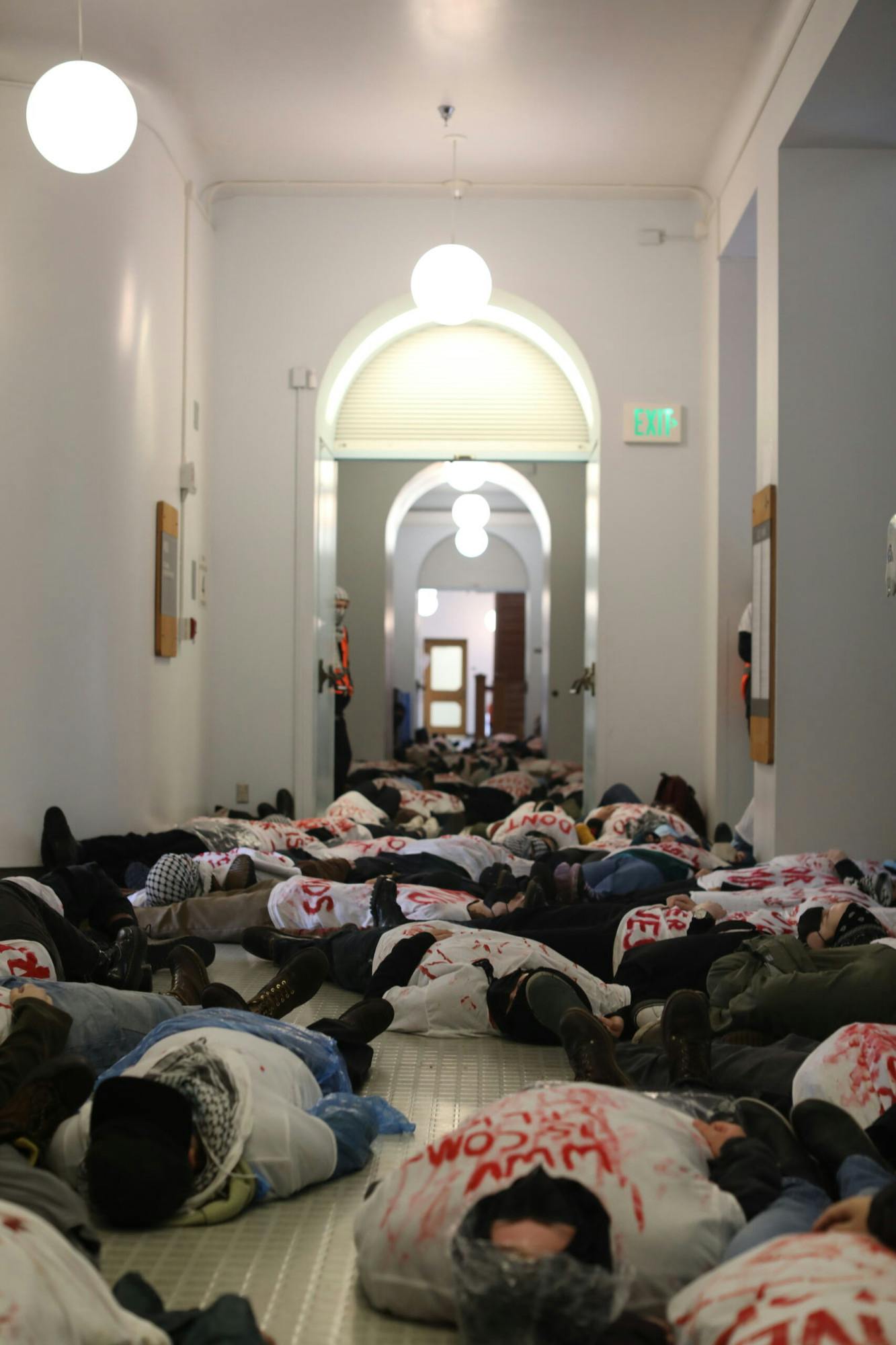
More than 80 students stage a die-in inside Old Main on May 28, 2024, in Bellingham, Wash. wearing white shirts with fake blood and messages like “WWU Profits from Genocide.” The action organized by the WWU Divest Apartheid unfolded after 10 and a half hours of negotiations between them and the university leadership. // Photo courtesy of the WWU Divest Apartheid Coalition
Hailey Brown (they/them) is a campus news reporter for The Front this quarter. They are a third-year visual journalism major with a minor in women’s, gender, and sexuality studies. Outside the newsroom, you can find them taking too many photos, on the beach collecting sea glass, or with their nose in any book. You can reach them at haileybrown.thefront@gmail.com.


