

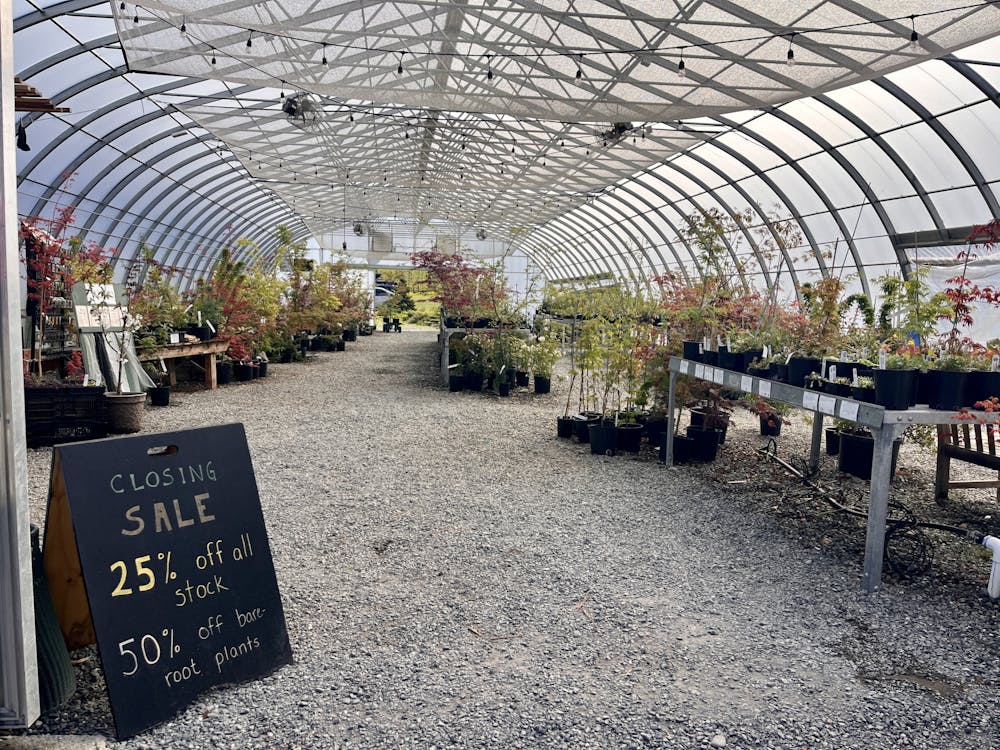
Cloud Mountain Farm Center, a long-standing local farm, plant nursery and agricultural education center in Everson, will be closing its nursery this June after losing financial support.
Cloud Mountain Farm was founded in 1978 by Tom and Cheryl Thornton. Since its inception, Cloud Mountain has functioned as an apple orchard, garlic farm, vegetable crop producer and plant nursery.
After decades of providing the community with unique varieties of plants and agricultural expertise, the nursery will close permanently June 30.
“It’s been a really good run,” said Edward Johnson, Cloud Mountain’s nursery manager.
Johnson has been the nursery manager for eight months. He and four other members of the nursery staff will lose their jobs when the nursery closes.
According to Johnson, the money that the farm has lost was from a generous individual donor who had been supporting the farm for 13 to 14 years.
“We tried to replace funding for years, looking for grants to try to retain the identity of Cloud Mountain as a non-profit educational farm center, but the funding environment for that sort of model is pretty much impossible,” Johnson said.
Cloud Mountain’s financial burdens are not a unique problem. Running a small farm has become difficult nationwide as land prices soar and development encroaches.
According to Chantel Welch, American Farmland Trust’s PNW senior program manager, her organization’s “Farms Under Threat” report highlighted that between 2001 and 2016, 2,000 acres of farmland was lost or compromised by development every day.
“On top of the high cost of land, a challenge for local farmers is the cost of production compared to market prices, both at the local and international level,” Welch said. “As with any businesses, many farmers operate on thin margins and have to manage the added environmental pressures like pests, disease or unforeseen hailstorms. There are a lot of factors at play in the decrease of farms, and some are easier to address than others.”
Despite the challenges of financial hardship and the unpredictable forces of nature, Cloud Mountain has continued to push through and provide community-focused classes for the public.
Tom Dohman, a Bellingham resident, described his time during one of Cloud Mountain’s workshops as an educational and community-building experience.
He and his wife Kathy attended a wine making workshop where they were able to participate in the process of making wine from harvesting grapes to packaging their own bottles.
“It was just a good feeling to be there. It was really nice to just hang out with some like-minded folks that appreciated the different steps in wine making and then seeing the finished result,” Dohman said.
Dohman said he was personally disappointed to hear the farm was losing more funding because Cloud Mountain’s atmosphere and learning environment were incredibly unique.
“It’s different, I think, to visit a place that’s more of a working farm where you can walk down row after row of grapes growing up trellises,” Dohman said. “The folks that went there were eager to learn, and the folks that worked there were eager to teach.”
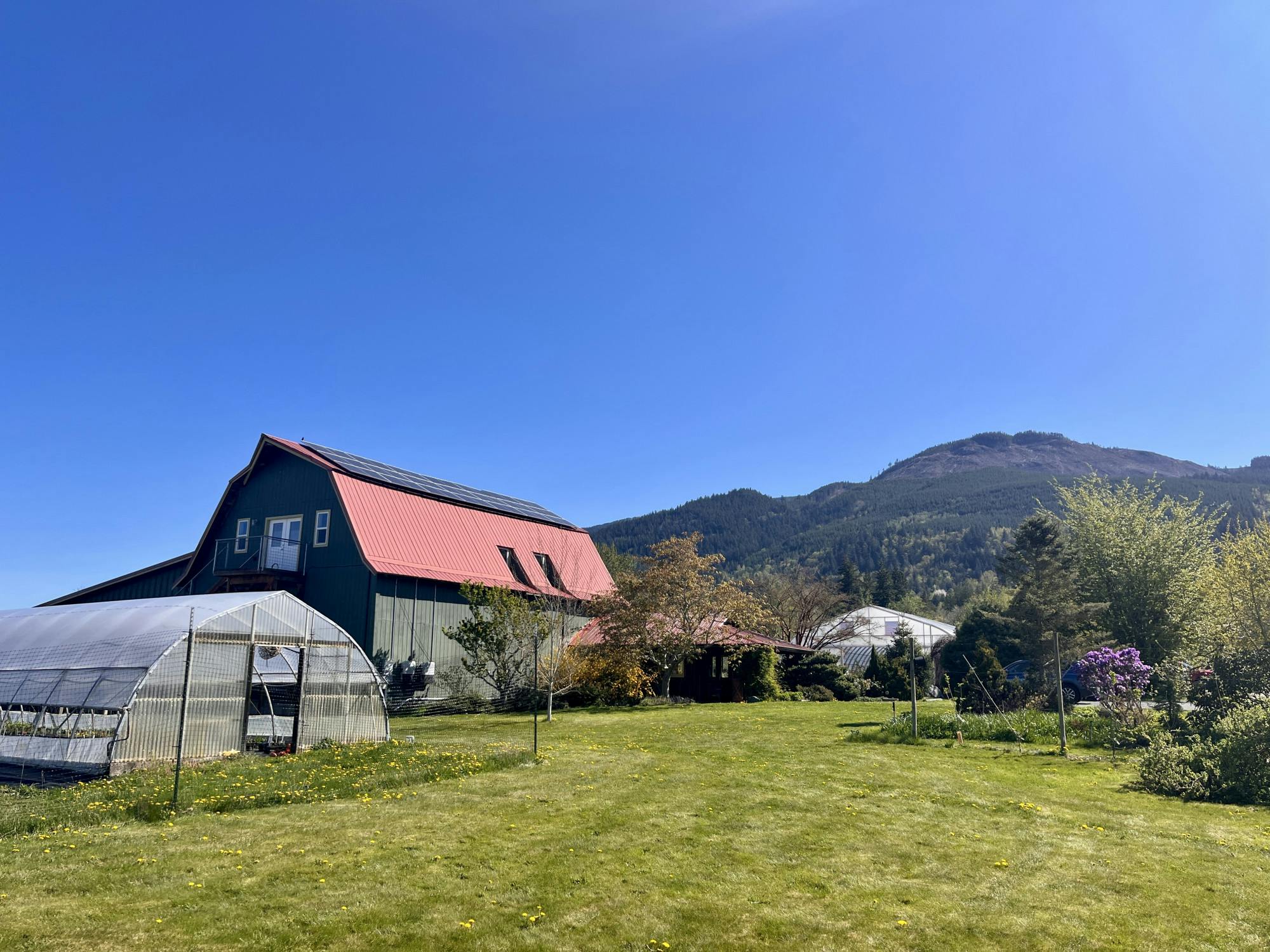
With nursery-led workshops concluding at the end of May, that special niche for community building around agricultural education will be lost.
Local business owners will also feel the impact of the loss of the nursery.
Gabe Stark, a professional landscaper in Bellingham, said he sent many of his clients to Cloud Mountain particularly because of their nursery staff’s expertise with fruit trees.
“I constantly had clients who had long relationships with Cloud Mountain,” Stark said.
His clients would buy trees from the nursery year after year and take in sick plants or trees to gain insight on how to treat them.
As the date of the nursery’s closure approaches, the future of Cloud Mountain Farm Center is still unclear.
According to Johnson, the Whatcom Community Foundation, the farm’s founders and Sustainable Connections are meeting frequently.
“They’re looking at options as far as land trusts and finding new operators to run the site, but there’s nothing concrete at the moment,” Johnson said.
Cloud Mountain’s nursery is having a large closing sale in order to clean out their inventory before the nursery closes. Starting May 1, all items at the nursery will be 50% off.
They’ve almost sold a year’s worth of inventory in just a few weeks, Johnson said.
Welch said that as local farms continue to face a lack of funding and attention, the best thing community members can do to offer support is put money into local foods as much as possible.
“Farms provide more than just food — and food is vitally important — but they can also provide ecosystem services. Their plants provide pollinator habitats, the soils capture and store water in a way that impermeable surfaces don't, all sorts of animals may pass through,” Welch said.
To many, Cloud Mountain provided more than food.
“Cloud Mountain has touched a lot of people in the county and it’s really unfortunate that it’s troubled financially, but I’m hopeful that something good will come from this property. It’s a beautiful place,” Johnson said.
Cloud Mountain’s nursery sales will continue to be held until the nursery’s closure on June 30. Its last onsite workshop, a botany walk and plant ID class, is scheduled for May 24.
Brenna Witchey (she/her) is a city life reporter for The Front this quarter. She is a third-year news/editorial pre-major and English minor. When she’s not working on a story, she likes practicing yoga, reading and going to the gym. You can reach her at brennawitchey.thefront@gmail.com.


